


Short answer: Ruvati sinks are a good-value choice for kitchens and bathrooms, and the brand is best known for 16-gauge stainless steel workstation sinks with built-in ledges and accessories. Pick stainless for daily cooking, fireclay for a farmhouse look, and ceramic or epiStone for the bathroom. Check cabinet size, mounting type, and warranty terms before you order.
Introduction
Shopping for a new sink should not feel like a research project. But once you start comparing Ruvati sinks, the options stack up fast: workstation or standard bowl, undermount or drop-in, stainless or fireclay, kitchen or bathroom. Add ledges, racks, and cutting boards, and it gets confusing.
It is also easy to fall for a sink online and measure the cabinet second. That order is where most regrets start.
If you want honest answers on whether the brand is any good, which model fits your cabinet, and whether a workstation sink is worth it, this guide is built for that. It covers the full Ruvati range for the kitchen and the bathroom, plus the details most guides skip: real cabinet sizes, what gauge actually means, who should skip a workstation sink, typical prices, and how to plan the install so it does not stall for weeks. Specs were checked against manufacturer spec sheets and retailer listings in November 2026, so confirm the exact model before you order.
How to use this guide:
- New to the brand? Start with the quick look at the brand.
- Want to narrow down styles? The type comparison table shows each option side by side.
- Already have a cabinet? Check cabinet fit and sizing before you fall for a model.
- Not sure a ledge sink suits you? See who should skip a workstation sink.
- Planning a bathroom? Jump to the bathroom options.
- Ready to buy? Go to typical prices and warranty rules.
Why Ruvati Is Worth a Close Look
Ruvati was founded in 2011 and is based near Austin, Texas. The idea was simple: good-looking kitchen and bath fixtures at prices regular homeowners can afford.
That focus shows in the specs. Its stainless lines are listed as 16-gauge T-304 stainless steel (18/10) with a brushed finish, sound guard padding, a 3.5 inch drain opening, and cUPC certification. They also carry a limited lifetime warranty. For fireclay and granite composite, the company says its collections are made in Italy.
Ruvati sinks get a lot of attention from people who want thick steel and included accessories without paying a premium-brand price. If you are weighing it against a big name, the breakdown in Ruvati vs. Kohler sinks shows where gauge, warranty, and price actually land.
Ruvati Sink Types
This table shows the main styles and what to watch for with each one.
| Sink type | Material | Best for | Watch for |
|---|---|---|---|
| Workstation undermount | 16-gauge T-304 stainless | Daily cooking and prep | Cabinet width and faucet clearance |
| Large dual-tier workstation (45 inch) | 16-gauge T-304 stainless | Big kitchens, two cooks | Needs a 48 inch minimum cabinet |
| Apron-front workstation | Stainless steel | Farmhouse look with a prep ledge | Heavy, may need cabinet changes |
| Fireclay farmhouse | Fireclay | Classic, glossy style | Can chip under a heavy impact |
Granite composite | Granite composite | Color choices and a solid feel | Typically heavier, confirm support |
| Bar and prep | Stainless steel | Islands, wet bars, small kitchens | Smaller bowl, less capacity |
| Bathroom basins | Ceramic, stainless, epiStone | Vanities and powder rooms | Match the drain to the overflow type |
Kitchen Sink Types Explained
Workstation Sinks
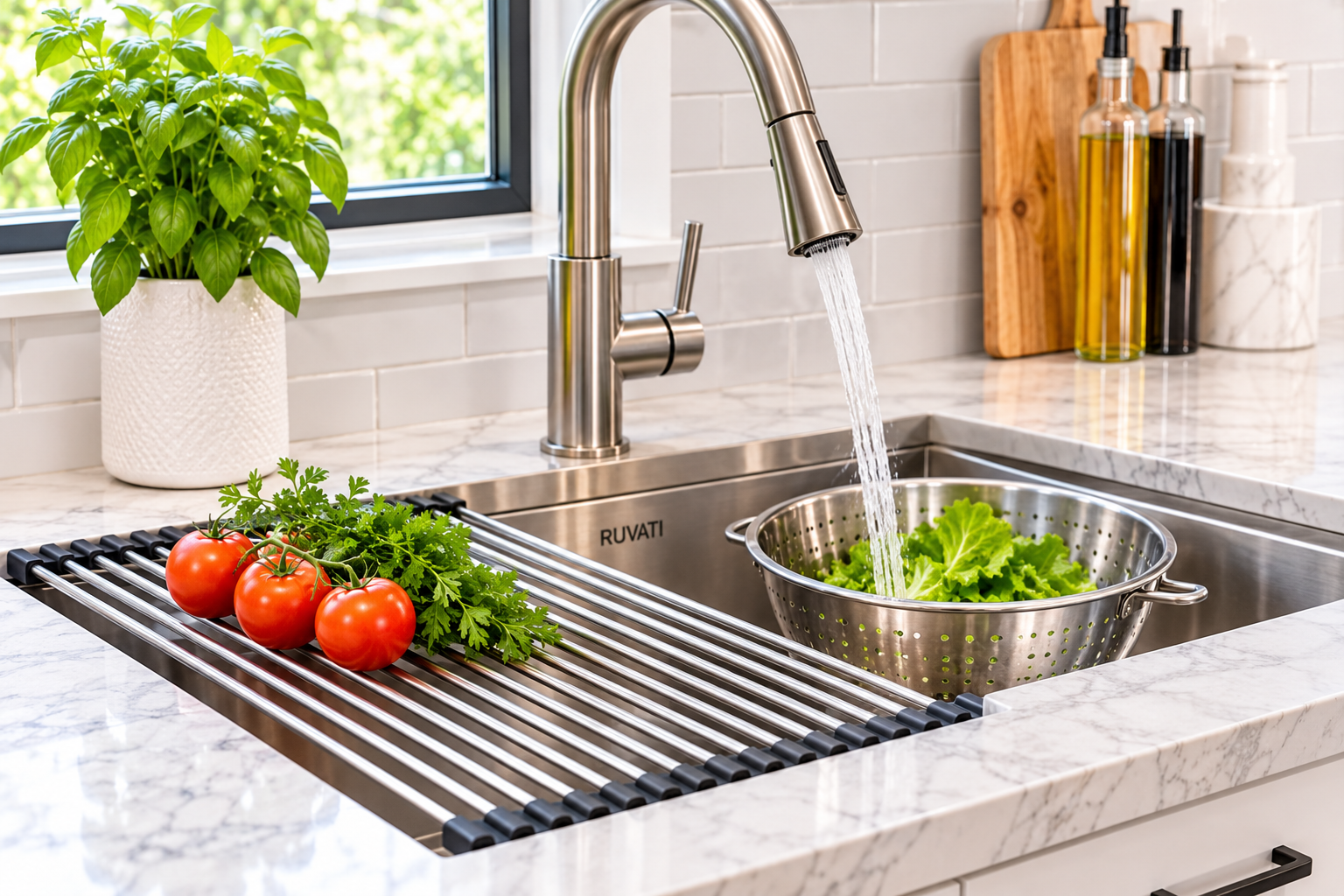
This is the style the brand is known for. A workstation sink has a ledge along the front and back of the bowl. Cutting boards, colanders, and roll-up racks slide along it, so you can chop, rinse, and drain over the bowl instead of crowding the counter.
Included accessories vary by model. Many listings include a cutting board, bottom rinse grids, and basket strainers, and some add a colander or a roll-up rack. Read the "included in box" list, because that is where the value shows up.
If your counters follow the standard kitchen counter height, the ledge workflow generally feels natural. If your counters are unusually low or high, test the reach in a showroom first.
Undermount and Drop-In Sinks
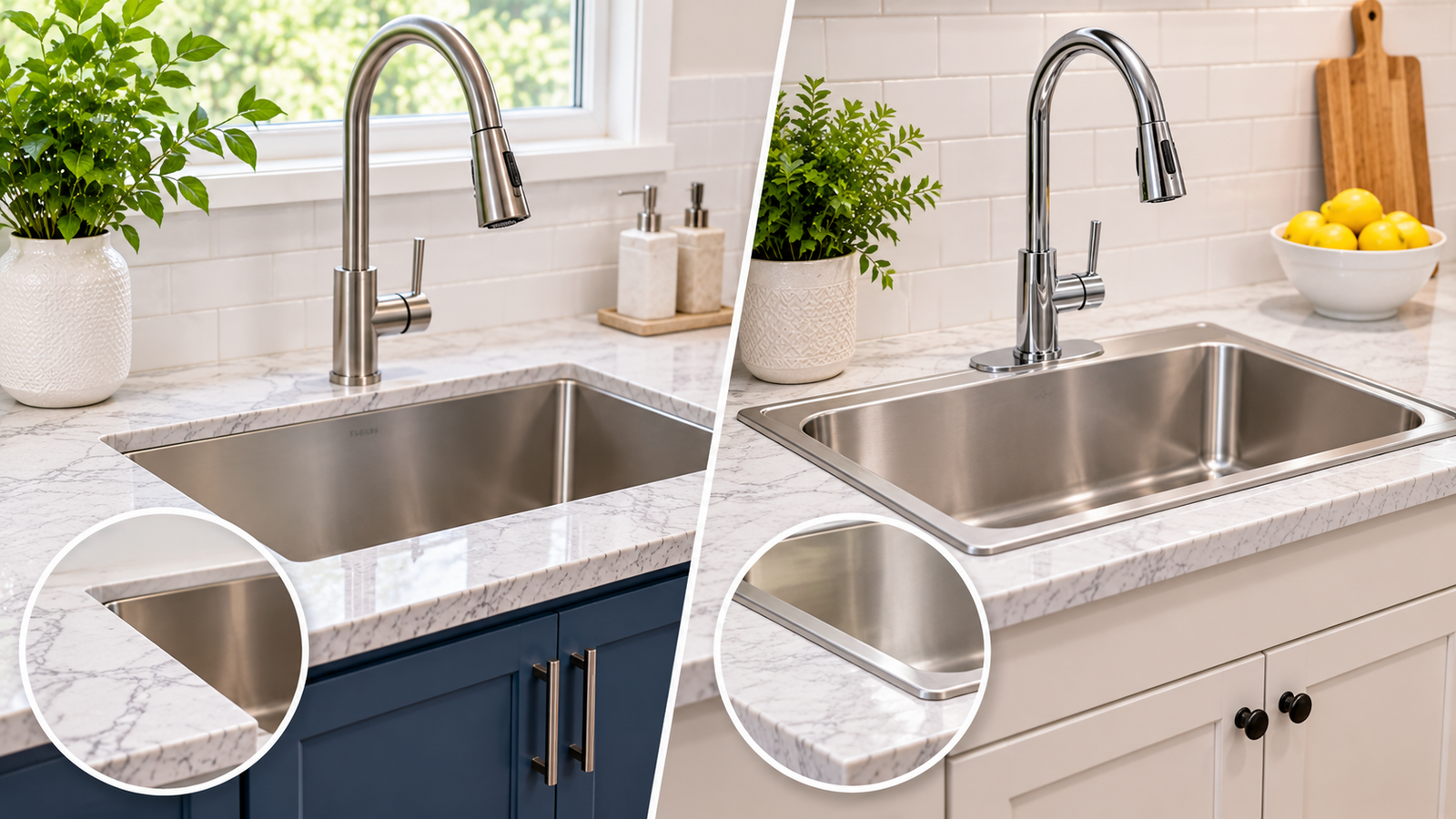
Undermount sinks mount beneath the counter. The edge is clean, and you can wipe crumbs straight into the bowl. Listings typically point to quartz, granite, and other solid surface counters for this style.
Drop-in sinks, also called topmount, sit on top of the counter with the rim resting on the surface. They are easier to install and work with laminate. The rim does catch crumbs, so expect a little more wiping.
Farmhouse (Apron-Front) Sinks
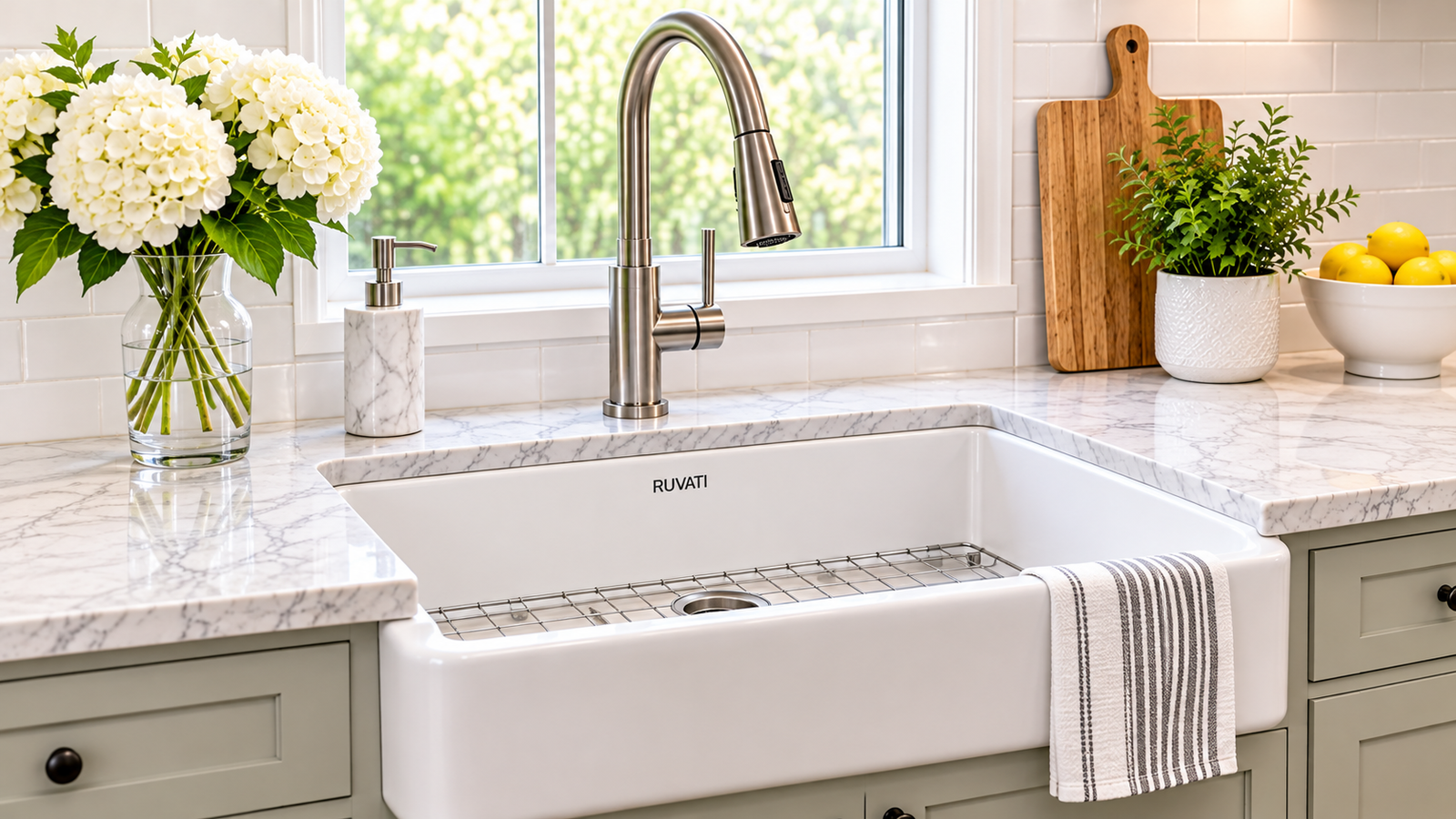
Apron-front sinks show a finished front panel. Ruvati makes them in stainless and fireclay. They hold big pots well, but they are heavy. One 36 inch stainless apron-front workstation model lists at about 60 pounds before accessories, and the brand recommends professional installation. Your cabinet may need changes to fit.
Bar, Prep, and Specialty Sinks
Smaller bar and prep sinks suit islands, wet bars, and tight kitchens. A 21 inch workstation bar prep model, for example, lists around $359 to $389. The brand also makes laundry, RV, outdoor, and low-divide double bowl sinks, which help if you wash large pots by hand.
Materials and Gauge: What the Numbers Mean
Spec sheets throw a lot of terms at you. Here is what they mean in plain words.
- Stainless steel: A lower gauge number means thicker steel, so 16-gauge is thicker than 18-gauge. Thicker steel dents less and feels sturdier. T-304 is the grade, and 18/10 refers to the chromium and nickel content that helps resist rust. Padding and undercoating cut down the drumming noise from running water and a garbage disposal.
- Fireclay: A hard, glazed ceramic with a classic look. It can chip under a heavy impact, so a bottom grid is a smart add-on.
- Granite composite: A colored composite material that is typically heavier than stainless. Confirm your cabinet can support it.
- Ceramic and porcelain: Mostly used for bathroom basins. They have a smooth, glossy finish that wipes clean easily.
Cabinet Fit and Sizing: Measure First
The most common buying problem is a sink that does not match the cabinet. Ruvati lists a minimum base cabinet size for each model. In the listings checked, it runs about three inches wider than the sink:
- 33 inch double bowl workstation: 33 x 19 inches outside, 10 inch bowl depth, 36 inch minimum cabinet
- 36 inch apron-front workstation: 36 inches wide, 21 inches front to back, 10 inch bowl depth, 39 inch minimum cabinet
- 45 inch dual-tier workstation: 43-3/8 x 16 inch bowl interior, 10 inch depth, 48 inch minimum cabinet
A 10 inch bowl is great for stockpots and baking sheets. It also takes space from the cabinet below. If you have a disposal or a pull-out trash bin, measure the clearance first.
Measure the cabinet's inside width, the front-to-back depth, and the plumbing location, then compare them with the spec sheet. The cutout and clearance math in kitchen sink sizes and dimensions walks through the same steps.
Is a Workstation Sink Right for You?
Workstation sinks are popular, but they are not for every kitchen. Think about these points before you commit.
- You rarely use the accessories. The ledge and extras are the whole point. If you never cut anything over the sink, a plain single bowl may be the simpler choice.
- Storage space is tight. Racks, boards, and grids need somewhere to live when they are not on the sink.
- Faucet reach matters. A low spout can bump into a cutting board on the ledge. A tall pull-down neck solves most of that, so compare spout heights across the best kitchen faucet picks before you buy.
- Your counters are laminate. Undermount workstation models are made for stone and solid surface counters. With laminate, look at a drop-in version.
- You wash big pans by hand. A low-divide double bowl gives you two basins with an easier pass-through for large pans.
Ruvati Sinks for the Bathroom
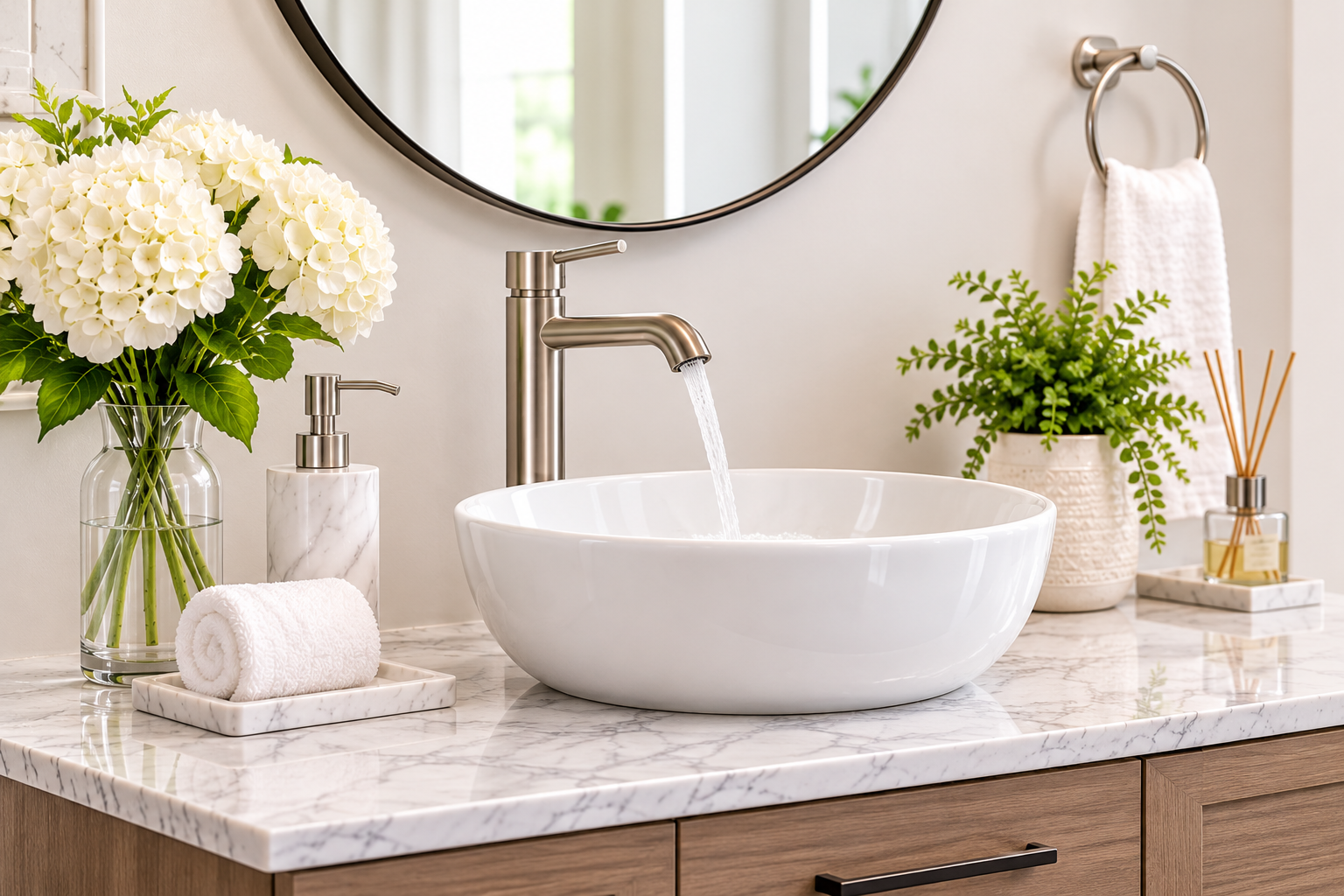
The bathroom range is wider than most people expect. It includes ceramic and porcelain basins, stainless steel, decorative glass, and colorful vessel sinks in a material the brand calls epiStone. Installation styles include undermount and vessel.
A few tips save headaches here:
- Match the basin to the vanity first. The shape and cutout depend on your top, and bathroom vanity sizes, styles, and materials decide which basins will actually fit.
- Vessel sinks sit above the counter. Your faucet must be tall enough to clear the rim, so measure before you order.
- Check the overflow. Some bathroom basins have an overflow hole and some do not, and the pop-up drain has to match. Ruvati sells separate pop-up drains for sinks without overflow, so confirm before you buy the drain.
- Check the faucet holes. Make sure the basin is drilled the way your faucet expects.
Typical Prices: What to Expect
Prices vary by retailer and change with sales. Listings checked in November 2026 gave a rough picture for stainless workstation models:
- 21 inch workstation bar prep sink: about $359 to $389
- 33 inch double bowl workstation: roughly $445 to $550
- 45 inch dual-tier workstation: about $900 to $990
Fireclay, granite composite, and bathroom prices vary widely by size and finish, so compare the exact model. Since Ruvati sinks often ship with a cutting board, grids, and strainers, count what is in the box before you compare prices with a bare sink.
Warranty and Buying From the Right Seller
Ruvati backs its sinks with a limited lifetime warranty. The rules matter more than the label:
- It covers home use only and applies to the original purchaser. It is not transferable.
- Proof of purchase is required.
- Accessories such as rinse grids, cutting boards, and strainers are not covered.
- Shipping and installation labor are not included.
Buy from an authorized seller, keep the receipt, and take a photo of it the day you order. Registering the product on the brand's website is also said to speed up warranty service.
Installation Prep Checklist
The install itself is quick. The prep is what decides whether it goes smoothly.
- Support and reveal: For undermount models, the brand's guidance calls for support bars and recommends a 1/4 inch reveal.
- Countertop fabricator: With stone, book early. Cutouts take scheduling.
- Drain and disposal: The 3.5 inch opening fits standard disposals, but check whether the flange or strainer is included.
- Safety: Sink edges can be sharp, so wear cut-resistant gloves.
- On delivery: Open the box and check the bowl and finish before install day. Damage is easier to sort out when you catch it early.
Plan the Project: A Simple Timeline
The waiting is what trips people up, not the work. This order keeps things moving.
- Days 1 to 2, measure. Cabinet width, depth, plumbing location, and the old cutout.
- Week 1, decide and order together. Order the sink, faucet, strainer, and disposal flange at the same time, and check stock and lead times first.
- Weeks 1 to 2, book help. Schedule the countertop fabricator for stone cutouts, and a plumber if you need one.
- Delivery day, inspect. Check every piece before anyone arrives.
- Install day, dry fit first. Test the fit before you apply sealant, and give it most of the day.
- Next day, let it cure. Follow the sealant label before heavy use.
Time-savers:
- Keep the old sink until the new one fits.
- Test the shut-off valves a week ahead, so a stuck valve does not stop the job.
- Photograph the plumbing before you take anything apart.
Real-Life Examples
These are typical situations, not customer case studies, but they show how the choice usually plays out.
Example 1: The quartz kitchen remodel. A homeowner is replacing a worn sink in a new quartz counter. A 33 inch double bowl workstation with a 36 inch cabinet fits, includes the accessories, and costs less than a premium name. The savings go toward a better faucet.
Example 2: The family that handwashes. A busy household washes pots and roasting pans by hand every night. A low-divide double bowl lets them move large pans between basins, and the bottom grids protect the finish.
Example 3: The powder room refresh. A small bathroom gets a vessel basin on a narrow vanity. The owner checks the overflow type, picks a matching pop-up drain, and swaps to a taller faucet so the spout clears the rim.
Care and Everyday Maintenance
Good habits protect the finish and your warranty.
- Rinse and dry the sink after use, and buff stainless with a soft cloth.
- Skip steel wool. It can scratch and discolor the surface.
- Avoid bleach on stainless steel, since it can cause pitting if left on the sink.
- Do not let soap or cleaners dry on the surface.
- Use a bottom grid to cut down on scratches.
- If you see rust-colored spots, Ruvati's care guidance says they usually come from outside iron particles, not the sink itself. Clean them off promptly.
- Clean the bowl and the drain together, since a quick kitchen sink drain cleaning takes a few minutes and keeps smells from building up.
What Owners Often Report
Ratings tend to be strong. One 33 inch stainless farmhouse listing on a major retailer showed 4.9 out of 5 stars across 76 ratings in 2026. Strong ratings still do not replace reading reviews for the exact model you want.
The most common complaint with any brushed stainless sink is surface scratching. Ruvati's own care guidance says minor scratches are hard to avoid, and a bottom grid helps. When you read reviews, filter for the one and two star ones. Look for patterns like shipping damage or accessory fit, because those tell you more than the five star praise.
Frequently Asked Questions
Are Ruvati sinks good quality?
For stainless steel, yes in most cases. The stainless lines checked are listed as 16-gauge T-304 steel with sound padding and a limited lifetime warranty. Fit and finish still depend on the exact model, so read recent reviews.
What gauge are Ruvati stainless sinks?
The lines checked are 16-gauge T-304 stainless (18/10). Confirm the gauge on the spec sheet for your model.
Where are Ruvati sinks made?
It depends on the model. The company says its fireclay and granite composite collections are made in Italy. Check the product page for stainless and bathroom models.
Does Ruvati offer a warranty?
Yes, a limited lifetime warranty for home use. It applies to the original purchaser, needs proof of purchase, and does not cover accessories.
What cabinet size do I need?
In the listings checked, the minimum cabinet was about three inches wider than the sink. A 33 inch sink listed a 36 inch cabinet, and a 45 inch sink listed a 48 inch cabinet.
Can I use a workstation sink with laminate counters?
Undermount models are made for stone and solid surface counters. With laminate, choose a drop-in version.
Conclusion
Ruvati sinks work best when you match the sink to your kitchen instead of the other way around. Stainless workstation models give you thick steel and handy accessories at a fair price. Fireclay suits a farmhouse look, and the bathroom range covers ceramic and vessel styles for most vanities.
Before you order, measure the cabinet, confirm the minimum size, check the faucet reach, and keep your receipt.